📊 Novig: the next big thing
Plus: Kalshi's lobbying push gets a home base, new applications of prediction markets on social settings, live prediction odds in sporting events, and more.
GM. You’re reading PredictionDesk, the daily newsletter that helps you become a prediction markets expert in under 5 minutes.
Here’s what we got for you today:
🎯 Novig Bets on Federal Regulation After Six States Ban Sweepstakes Model
🇺🇸 Kalshi plants a flag in Washington
💰 Polymarket finds new possibilities to trade
📈 Market Moves
📊 Odds & Ends

NOVIG PLAYS THE LONG GAME 🎯
Novig, the sports betting exchange-turned-sweepstakes platform, filed for CFTC registration last week through a new entity called Ludlow Exchange LLC. The application, submitted January 22, puts Novig on the same track as Kalshi, Crypto.com, and Polymarket - seeking designated contract market (DCM) status that would let it offer real-money event contracts nationwide. It's a significant pivot for a company that spent the last year building out a sweepstakes-based model, and a signal that the regulatory winds have shifted enough to warrant a federal play.

CEO Jacob Fortinsky and CTO Kelechi Ukah founded Novig in 2021 while still students at Harvard. Both came from institutional finance backgrounds - Fortinsky at Jane Street and Bank of America, Ukah in machine learning and political operations. The idea emerged from Fortinsky's experience in private Discord and Signal groups where sharp bettors, limited by sportsbooks, would wager against each other peer-to-peer. That origin story shows up in the product: Novig runs a true exchange model with no vig, and claims 90% of trades are fully peer-to-peer. They've raised $30.9 million to date, including an $18 million Series A last August led by Forerunner, with backing from Lux Capital, Y Combinator, and Paul Graham.
The timing isn't subtle. Sweepstakes gaming, which Novig pivoted to after its betting exchange struggled to scale beyond New Jersey and Colorado, is now under siege. Six states - California, New York, Montana, Connecticut, New Jersey, and Nevada - have passed laws banning or restricting dual-currency sweepstakes. More bills are pending in Maine, Maryland, Mississippi, and Indiana. Novig already exited New Jersey last year when the state explicitly banned its model. The writing is on the wall: sweepstakes isn't a long-term regulatory moat.
What makes Novig's approach interesting is the dual-track hedge. If Kalshi wins its ongoing legal battles and sports event contracts remain federally protected, Novig - with DCM approval - could pivot to real-money trading overnight. If sports prediction markets get carved out by state regulators, the sweepstakes model (in states that still allow it) provides a fallback. Fortinsky has been upfront about the strategy: "We're more than happy to be second movers. They can fight the legal battles, then we'll swoop in and deliver the best experience for users."
DCM approval won't come fast. Railbird and QCEX both applied in late 2022 and weren't approved until mid-2025 - a 2.5-year timeline. If that pattern holds, Novig wouldn't be operational as a CFTC-regulated exchange until 2028 or 2029. But the filing itself is a signal that the company is positioning for the long game, and the sports-only focus gives it a differentiated lane. Kalshi and Polymarket are generalists covering politics, economics, and culture. Novig is betting that sports—the category driving the most volume and the fiercest regulatory battles—deserves a specialist.

KALSHI OPENS D.C. OFFICE, HIRES FIRST GOVERNMENT RELATIONS LEAD 🇺🇸
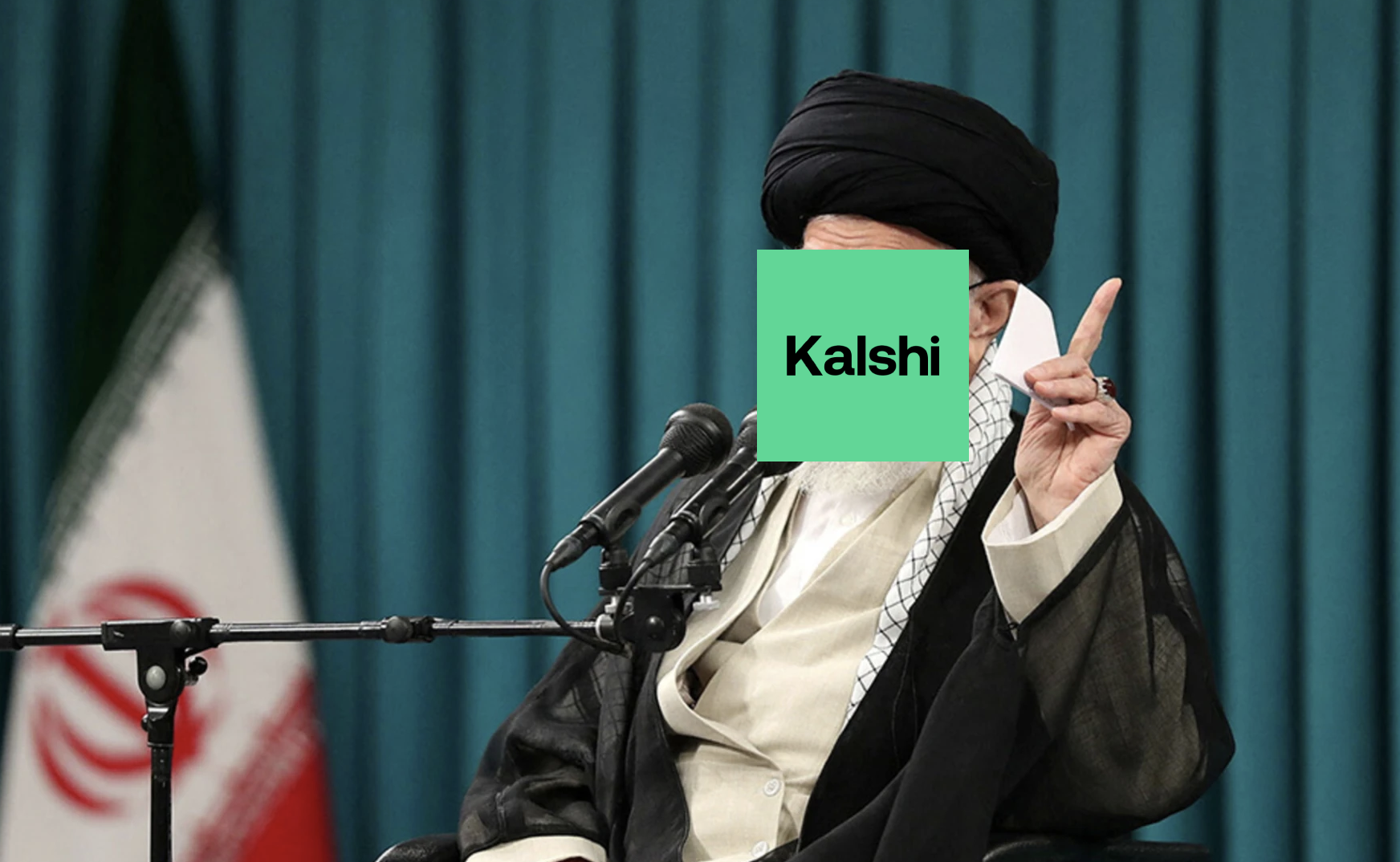
Kalshi has opened a D.C. office and hired its first head of federal government relations. John Bivona, a Biden administration alum who served as DHS' White House liaison and worked on the Biden campaign, takes the role. He was previously at Intersection Government Relations, which is now one of Kalshi's outside lobbying firms.
Prediction markets have been on a lobbying tear since the 2024 court ruling that let Kalshi offer election contracts over the CFTC's objections. Late last year, Kalshi joined Crypto.com, Coinbase, and Robinhood in launching the Coalition for Prediction Markets, which just hired former Reps. Sean Patrick Maloney and Patrick McHenry as president and senior adviser. That's a Democrat and a Republican, the former House Financial Services chair, no less, signaling the industry wants to be taken seriously on both sides of the aisle.

Kalshi spent $615,000 on federal lobbying last year, down slightly from $670,000 the year before. Not a huge number, but the footprint is expanding: in-house lobbyist, outside firms, a physical office. The real spend is on the bipartisan talent.
The fight ahead is with casinos and state regulators who see event contracts - especially sports-adjacent ones - as unlicensed gambling. Several states have already moved to ban them. The industry's counter-argument: prediction markets are financial products, not slot machines, and they should be regulated by the CFTC, not state gaming commissions.
That argument now has a permanent address in Washington.

POLYMARKET SAYS YOU CAN BET AGAINST FRIENDS💰
Neesh774, a design engineer for Polymarket, posted an interesting new potential application of prediction markets on X today, one that allows users to place bets on events with friends, termed Wager. Wager, as a concept, reframes betting away from platforms and toward relationships. Instead of opening an app, scanning markets, and placing trades against anonymous counterparties, users make commitments directly with people they already talk to every day. The interface lives where social coordination already happens, and the wager becomes a conversational object rather than a financial transaction. That design choice matters because it collapses the distance between belief and expression. You no longer broadcast opinions into a void. You stake them in front of peers whose reactions carry social weight.

This kind of product shifts the unit of analysis from the market to the group. Traditional prediction markets optimize for liquidity aggregation and price discovery across thousands of participants. A messaging native wagering tool optimizes for trust, shared context, and repeated interaction. The edge comes less from information asymmetry and more from reputational feedback loops. When bets live inside friendships, being wrong carries consequences beyond a balance change. Being right compounds credibility in a way that feels closer to social capital than financial return.
Bringing that sensibility into Polymarket suggests an ambition to expand the surface area of prediction markets beyond traders and into everyday discourse. It implies a future where markets become features rather than destinations. Instead of asking users to come to a platform to express belief, the platform inserts itself into moments where belief is already being debated. Every group chat argument about elections, sports, or culture becomes latent market demand waiting to be formalized.
This also reframes how onboarding works. The hardest problem in prediction markets has always been participation, because markets require users to care enough to act and to understand enough to trade. A social wagering layer lowers that barrier by grounding participation in familiar behaviors. People already argue, already keep score, already make informal bets. Encoding that behavior into software transforms something casual into something legible and settleable without changing the underlying motivation.

MARKET MOVES 📈
📈 Biggest swing: “What price will Hyperliquid hit in January?” moved 0.7% → 83% (Polymarket)
💰 Top earner: @MatrixDivi - $176,790 24H Profit (Polymarket)
🤔 Weirdest market: “Number of TSA Passengers February 2?” (Polymarket)

ODDS & ENDS 📊
Polymarket displayed live odds during a UFC fight for the first time last Saturday, a preview of where event contracts are headed.
The CFTC and SEC rescheduled their joint event on crypto regulatory harmonization.
Polymarket users are getting impatient with Polygon's reliability issues and increasingly vocal about wanting their own chain.

RATE TODAY’S EDITION

MEME OF THE DAY 😂

Dalio: “Stocks Only Look Strong in Dollar Terms.” Here’s a Globally Priced Alternative for Diversification.

Ray Dalio recently reported that much of the S&P 500’s 2025 gains came not from real growth, but from the dollar quietly losing value. Reportedly down 10% last year!
He’s not alone. Several BlackRock, Fidelity, and Bloomberg analysts say to expect further dollar decline in 2026.
So, even when your U.S. assets look “up,” your purchasing power may actually be down.
Which is why many investors are adding globally priced, scarce assets to their portfolios—like art.
Art is traded on a global stage, making it largely resistant to currency swings.
Now, Masterworks is opening access to invest in artworks featuring legends like Banksy, Basquiat, and Picasso as a low-correlation asset class with attractive appreciation historically (1995-2025).*
Masterworks’ 26 sales have yielded annualized net returns like 14.6%, 17.6%, and 17.8%.
They handle the sourcing, storage, and sale. You just click to invest.
Special offer for my subscribers:
*Based on Masterworks data. Investing involves risk. Past performance is not indicative of future returns. Important Reg A disclosures: masterworks.com/cd.