📊 Polymarket's opening a bar in D.C.
Plus: CFTC copies Kalshi's homework, and Polymarket acquires Brahma's trading tech
GM. You’re reading PredictionDesk, the daily newsletter that helps you become a prediction markets expert in under 5 minutes.
Here’s what we got for you today:
🥃 Polymarket is opening a bar in D.C. for people who "monitor the situation"
📝 Enforcement advisory cites two insider trading cases the exchange already handled itself
💰 Polymarket brings Brahma's $1B-volume execution tech in-house
📈 Market Moves
📊 Odds & Ends

POLYMARKET WANTS YOU TO DRINK AND MONITOR THE SITUATION 🥃
Polymarket is opening a physical bar in Washington, D.C. called "The Situation Room," styled after the viral "monitoring the situation" meme. The concept: a sports bar where the TVs show live news feeds, flight radar, Bloomberg terminals, and Polymarket screens instead of ESPN. It opens this weekend.
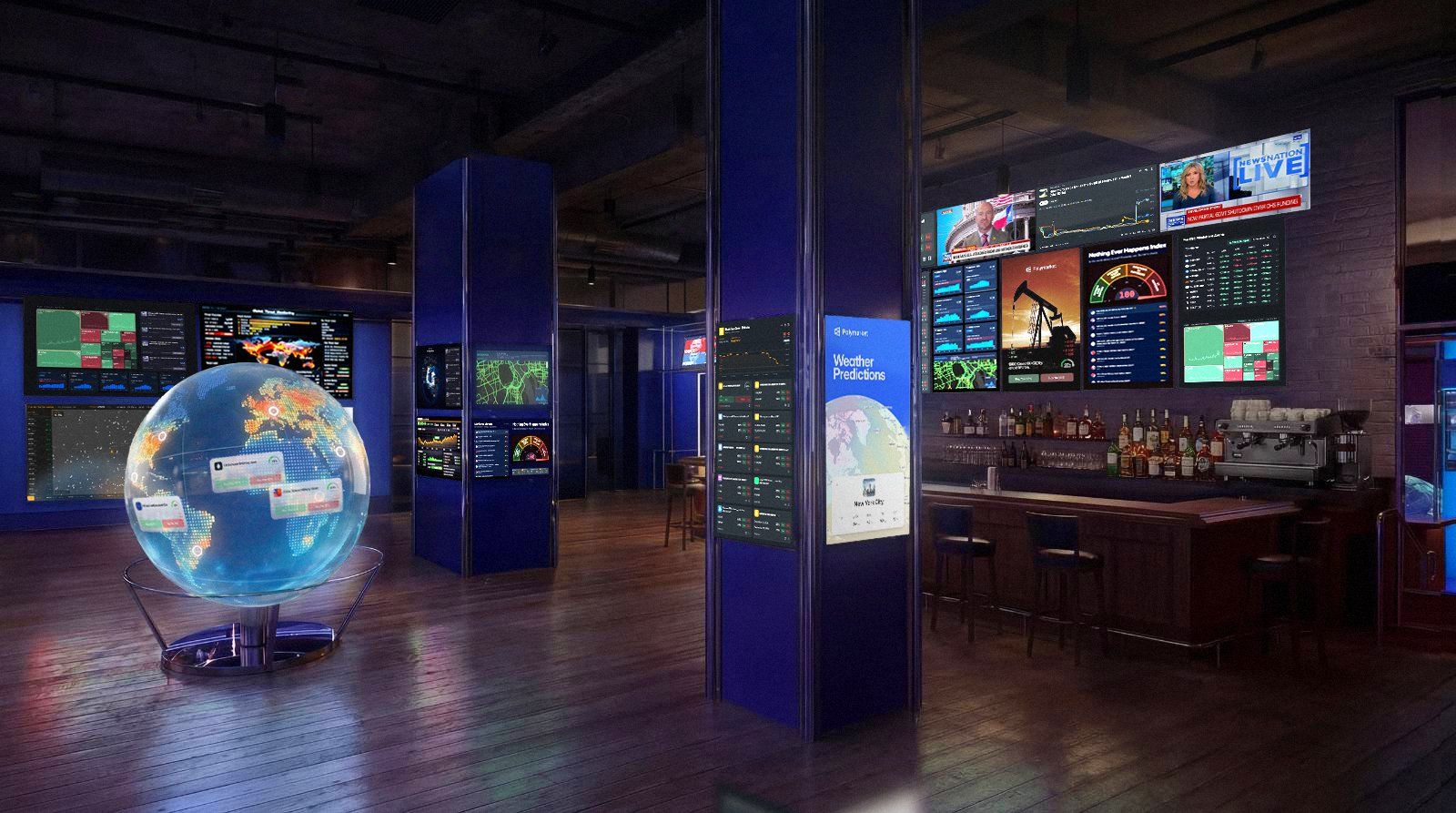
The renderings look like any Capitol Hill watering hole with leather seats and a wooden bar, except every screen on the wall is tracking geopolitical events and prediction market odds. Monogrammed matchboxes and napkins round out the aesthetic, which lands somewhere between a government agency and a crypto bro members' club. "Imagine a sports bar . . . but just for situation monitoring," Polymarket posted on X alongside the announcement.
It's a savvy brand play for a company that's been trying to position prediction markets as mainstream information infrastructure rather than niche gambling. Polymarket already won the attention war during the 2024 election cycle when its odds became the de facto scoreboard for political junkies and cable news producers alike. A physical space in D.C., the city where policy actually gets made, extends that narrative from screens into the real world.
The location choice matters. D.C. is where CFTC commissioners, Hill staffers, and lobbyists grab drinks after work. Putting a branded bar in their backyard is less about selling cocktails and more about reinforcing Polymarket's preferred framing: that prediction markets are serious analytical tools, not internet casinos. It's the kind of move Kalshi might have made if it weren't locked in perpetual regulatory trench warfare.
Whether "The Situation Room" becomes an actual recurring venue or a one-off marketing stunt remains unclear. Polymarket didn't respond to press inquiries. Either way, it signals that the company sees its brand as its biggest competitive asset, and it's willing to invest in making prediction markets feel like a lifestyle rather than just a product.

KALSHI DOES THE CFTC'S HOMEWORK 📝
The CFTC's Enforcement Division issued an advisory on prediction markets last month that was supposed to be a show of authority. Instead, it read more like a concession. The two insider trading cases the agency cited were both investigated, adjudicated, and sanctioned by Kalshi itself. The CFTC's contribution was a press release affirming it could have done what the exchange already did.
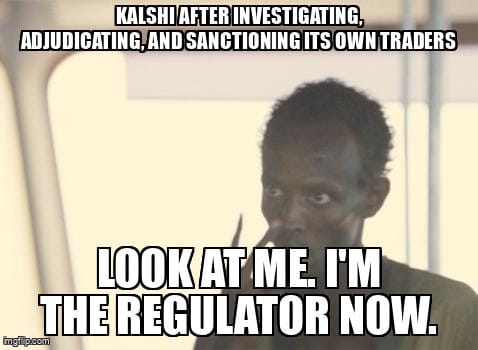
In one case, a political candidate was caught trading on his own candidacy after social media posts tipped off Kalshi's surveillance team. Penalty: $2,246.36 in disgorgement and fines, plus a five-year ban. In the other, a YouTube channel editor traded a related market using what Kalshi determined was material nonpublic information, drawing $20,397.58 and a two-year suspension. These are the CFTC's marquee prediction market enforcement actions, and neither involved the agency actually doing the enforcing.
CFTC Enforcement Division staffing dropped from 161 full-time employees in FY 2024 to 127 in FY 2025, and the FY 2026 budget requests just 114. That covers all CFTC-regulated markets, not just prediction markets. The SEC has FINRA doing frontline surveillance, broker-dealers filing suspicious activity reports, and decades of insider trading case law to draw on. The CFTC's legal hook is Rule 180.1, a broad anti-fraud provision from 2011 that's been tested in a handful of traditional commodities cases.
"The intensity of enforcement is way different," UCLA's Andrew Verstein told The Verge. "If you're insider trading, you look at prediction markets and think, 'No one is watching, and if anyone were, no cases have been vigorously contested and no one gets in trouble.'" Kalshi says it's opened roughly 200 investigations and had about a dozen become active cases. But suspicious activity volume appears much higher than what platforms publicly acknowledge.
What does "regulation" actually look like right now? Exchanges monitor their own order flow, impose small penalties when they catch something obvious, and the CFTC issues advisories reminding everyone it has authority. Self-policing with a federal letterhead. That works fine when a candidate betting on himself is the hardest case the system has to crack. It won't work when sophisticated actors start testing a regulator with 114 enforcement staff for the entire derivatives market and almost no prediction-market case law to draw on.

POLYMARKET SKIPS THE SHORTCUT BY BUYING ONE 💰
Polymarket acquired DeFi infrastructure firm Brahma on Tuesday, bringing Brahma's execution and settlement technology in-house as the platform looks to scale. Deal terms weren't disclosed.
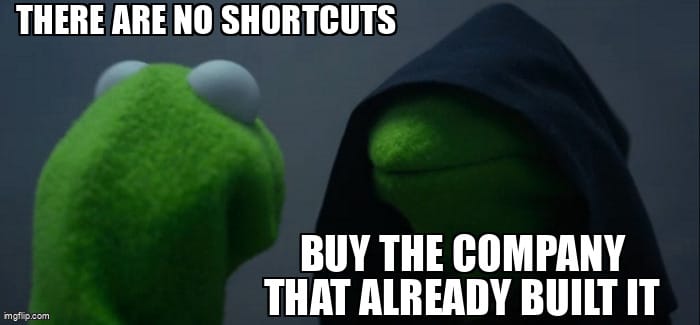
Brahma isn't a household name, but its numbers are real: more than $1 billion in transaction volume processed, over $100 million in total value locked, and 10,000-plus accounts created. The firm built tools for on-chain execution and settlement - the plumbing that makes blockchain-based trading work at speed. Polymarket CEO Shayne Coplan framed the deal bluntly: "Building reliable infrastructure across blockchain networks and traditional financial rails is hard - there are no shortcuts."
Brahma's existing products - Accounts, Agents, and Swype.fun - are being wound down within 30 days, with users told to migrate funds and close positions. That's a clean break, not a hedge. The entire Brahma team is going all-in on Polymarket's stack.
The platform already dominates prediction market volume, but blockchain-native trading still carries friction that keeps institutional and mainstream users at arm's length. Coplan wants engineers who can "design, operate, and scale complex products for sophisticated users," which reads as a signal that Polymarket is building for a class of trader that expects the reliability of a traditional exchange, not the jank of an early DeFi app.
It's a smart move if Polymarket's ambitions extend beyond event contracts. Bringing settlement infrastructure in-house gives them optionality to expand into new product types without depending on third-party rails that weren't built for their scale. The risk is distraction - integrating a team and tech stack while simultaneously growing a platform that's already straining under its own success. But if Polymarket wants to be the venue where serious money trades, the plumbing has to work. Acquiring the plumbers is one way to make sure it does.

MARKET MOVES 📈
📈 Biggest swing: "Will Trump visit China by March 31?" moved 7% -> 2% (Polymarket)
💰 Top earner: @delboytrotter -- $603,893 24H Profit (Polymarket)
🤔 Weirdest market: "Will Jesus Christ return before 2027?" at 4% odds (Polymarket)

ODDS & ENDS 📊
S&P Dow Jones Indices licensed the S&P 500 to Trade XYZ for what it calls the first officially licensed perpetual derivative on Hyperliquid, offering 24/7 trading to eligible non-U.S. investors - a TradFi index giant lending its brand to an onchain venue that most of Wall Street still won't touch.
A Buenos Aires court ordered Polymarket blocked across Argentina, directing ISPs to cut access and instructing Apple and Google to restrict the apps over unlicensed-betting and identity-verification concerns - adding another country to the growing list of jurisdictions treating prediction markets as gambling by default.
An Ipsos poll found 61% of U.S. adults classify prediction markets as closer to gambling than investing, with just 8% seeing them as investment tools - a perception gap the industry is spending millions in lobbying to close while state regulators keep reinforcing it.

RATE TODAY’S EDITION


Most coverage tells you what happened. Fintech Takes is the free newsletter that tells you why it matters. Each week, I break down the trends, deals, and regulatory shifts shaping the industry — minus the spin. Clear analysis, smart context, and a little humor so you actually enjoy reading it. Subscribe free.