📊 Kalshi puts death in the fine print
Plus: Senators push insider trading ban for officials, and a judge reverses her own Kalshi ruling
GM. You’re reading PredictionDesk, the daily newsletter that helps you become a prediction markets expert in under 5 minutes.
Here’s what we got for you today:
💀 Kalshi files CFTC rule formalizing how contracts settle when someone dies
👀 Five senators introduce sweeping prediction market trading ban for federal officials
⚖️ Federal judge recalls her own remand order in rare procedural reversal favoring Kalshi
📈 Market Moves
📊 Odds & Ends

KALSHI PUTS DEATH IN THE RULEBOOK 💀
Kalshi filed a proposed rule change with the CFTC on March 2 that formalizes how event contracts settle when the person at their center dies. The new Rule 6.3(e), effective March 17, establishes a default mechanism: contracts settle at the last traded price before the death. If Kalshi determines trading was "materially affected by the circumstances giving rise to the death," it can roll back further to the last price before those circumstances became known or reasonably anticipated by market participants.
When no last traded price represents a fair settlement, Kalshi's Outcome Review Committee steps in to determine one. The exchange can also halt or pause trading if it "reasonably believes" a death has occurred, is imminent, or circumstances giving rise to one may be unfolding. All determinations under the rule are final and not subject to review, language that gives Kalshi broad discretion while shielding it from trader disputes.

Kalshi's "leave office" contracts already contained death-specific carveouts - the WLEADEROUT series, for example, settled at the last traded price if a leader departed "solely because they have died." But those provisions lived in individual contract specifications, fine print that varied market by market. Rule 6.3(e) generalizes the approach across any contract where the primary subject is a natural person, pulling it out of ad hoc contract terms and into the permanent rulebook.
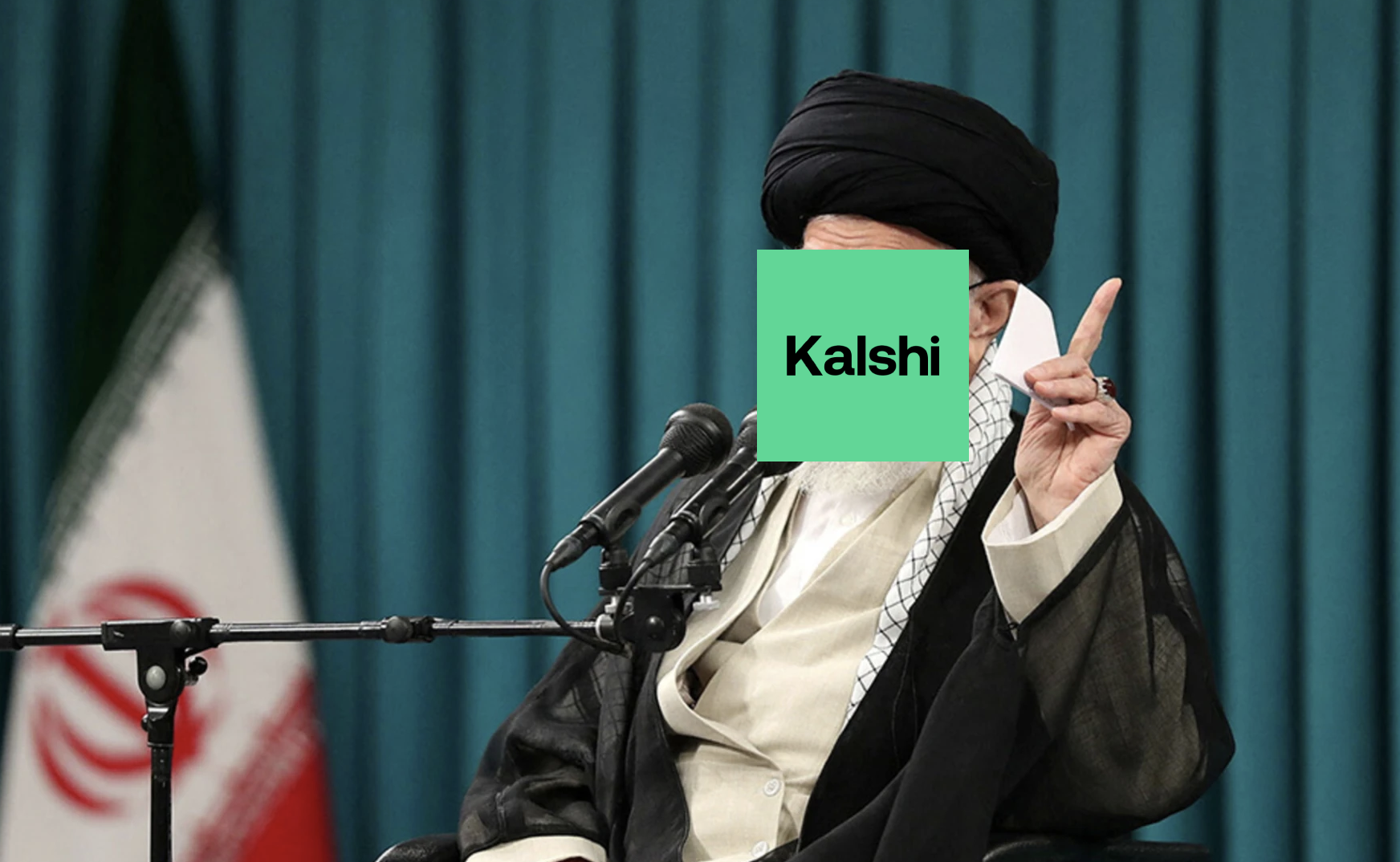
The filing follows backlash over how Kalshi handled markets tied to Iran's Supreme Leader, and the letter to the CFTC frames the change around market integrity and minimizing "perverse incentives" - a nod to the uncomfortable reality that person-centered prediction markets can create situations where traders profit directly from someone's death. Kalshi acknowledges participants were split on how it previously resolved these situations but says the recurring demand was clearer written guidance.
Whether the rule solves the reputational problem is a different question. The backlash over the Khamenei markets wasn't just about settlement mechanics - it was about whether a regulated U.S. exchange should be running markets that function as death pools at all. Codifying how those contracts settle makes the process more transparent, but it also makes the product more permanent. Kalshi is betting the controversy was about process, not principle. If the next "death market" headline hits and the public reaction is just as fierce, cleaner fine print won't be enough to contain it.

WASHINGTON'S NEW INSIDER TRADING BILL HAS A FAVORITE 👀
Senators Jeff Merkley and Amy Klobuchar introduced the End Prediction Market Corruption Act on Wednesday, proposing a blanket ban on event-contract trading by the president, vice president, and members of Congress. Senior executive branch officials face a narrower restriction - barred only from trading contracts tied to matters they personally and substantially participate in. Senators Chris Van Hollen, Adam Schiff, and Kirsten Gillibrand signed on as cosponsors, with backing from Public Citizen, CREW, and the Project On Government Oversight.
The Attorney General would be authorized to bring civil actions, with penalties set at the greater of $10,000 per violation or total profits from the prohibited trade - and the bill explicitly preserves the door for additional criminal or administrative remedies. It also grafts event contracts onto the existing federal financial disclosure framework, requiring officials to report transactions within 30 days of notification, and no later than 45 days after the trade. Think the STOCK Act, but for prediction markets.

The provision most likely to reshape the competitive landscape targets foreign platforms. Any "foreign board of trade" - defined as organized or principally based outside the U.S. - would have to file quarterly reports with the CFTC detailing trades that violate the ban, or risk losing its CFTC registration. That gives regulators a new lever over offshore venues that have operated with minimal U.S. oversight, and it's not hard to see which platforms that's aimed at.
Merkley said the legislation was developed after consultation with Kalshi, and the company publicly endorsed it: "We support Congress and regulators taking action to police insider trading, and keep prediction markets onshore and under federal regulation." That's not altruism. Every rule that raises the compliance bar for offshore competitors strengthens Kalshi's position as the domestic, CFTC-regulated incumbent. The company has spent months pointing to its own internal investigations and surveillance infrastructure as proof that regulated venues can self-police - now it's getting the legislative framework it asked for.
The bill joins Rep. Ritchie Torres's broader Public Integrity in Financial Prediction Markets Act, introduced in January, which would extend insider-trading restrictions to a wider set of federal employees. Together they reflect a bipartisan consensus forming around one idea: prediction markets are financial instruments, and the people who move the outcomes they track shouldn't be allowed to trade them. For an industry that has spent years arguing it isn't gambling, that framing is a win - even if the immediate headline is a restriction. The catch is execution. Congress has a habit of treating financial regulation as urgent right up until something else takes over the news cycle.

NEVADA JUDGE TAKES IT BACK ⚖
A federal judge in Nevada just pulled off a rare procedural move: recalling her own remand order after it had already been transmitted to state court. On March 2, U.S. District Judge Miranda Du granted the Nevada Gaming Control Board's motion to send Kalshi's removal case back to Carson City. Kalshi filed emergency stay motions the next day. By March 4, Judge Du had recalled the remand and set a compressed briefing schedule - response due today, reply due March 9.
The underlying dispute tracks a pattern we've seen play out in Massachusetts: Nevada wants to enforce state gaming law against Kalshi's sports-related event contracts. Kalshi removed the state enforcement case to federal court under three theories - substantial federal question, complete preemption under the Commodity Exchange Act, and federal officer removal. Judge Du rejected all three. But because Kalshi invoked federal officer jurisdiction under § 1442, it has a statutory right to appeal the remand, a procedural hook most remand orders don't offer.

The Ninth Circuit is already scheduled to hear oral argument on April 16 in Kalshi's related federal preemption case, and Kalshi's stay motion argues that letting Nevada's state case proceed in the meantime risks conflicting rulings on the same core question: does CFTC oversight preempt state gambling law? In federal court, where preemption doctrine has real teeth, Kalshi has a fighting chance. In a Nevada state court that views the product as unlicensed sports betting, it probably doesn't.
Kalshi also alleged that Nevada moved aggressively in state court while the federal stay motions were pending, filing a request for an ex parte temporary restraining order in Carson City without disclosing the federal proceedings to the state judge. Whether that's sharp litigation tactics or a genuine procedural foul, it tells you how much both sides want to control the venue before the Ninth Circuit weighs in.
This procedural tug-of-war - state filing, federal removal, remand, emergency stay, recall - is becoming the playbook for every state enforcement action against a CFTC-regulated prediction market. The April 16 argument could settle the question. If the Ninth Circuit finds federal preemption, the state-by-state enforcement model falls apart. If it doesn't, every gaming commission in the country gets a green light. Six weeks of procedural maneuvering in Carson City and Reno may end up determining whether this industry operates under one regulatory framework or fifty.

MARKET MOVES 📈
📈 Biggest swing: "DeepSeek V4 released by March 31?" moved 33% -> 69% (Polymarket)
💰 Top earner: @0x4924...3782 - $223,493 24H Profit (Polymarket)
🤔 Weirdest market: "Will Jesus Christ return before 2027?" at 4% odds (Polymarket)

ODDS & ENDS 📊
Robinhood sues Michigan's attorney general in federal court, challenging the state's crackdown on event contracts after Michigan sued Kalshi over what it calls unlicensed sports betting.
A Nasdaq filing signals Wall Street's push into prediction-market-style trading products, as legacy exchange infrastructure moves toward event-driven contracts.
Stocktwits announces its 2026 Cashtag Awards at the NYSE with Polymarket as presenting partner - another sign event markets are embedding into mainstream trading culture.

RATE TODAY’S EDITION