📊 Polymarket's Magamyman problem
Plus: Polymarket nukes its own market, and Mulvaney bets against prediction markets
GM. You’re reading PredictionDesk, the daily newsletter that helps you become a prediction markets expert in under 5 minutes.
Here’s what we got for you today:
🇺🇸 A trader called "Magamyman" is the clearest case yet of prediction markets being used to monetize advance military knowledge
☢️ Polymarket quietly pulls nuclear detonation contracts amid Iran conflict backlash
🎲 Mick Mulvaney's "Gambling Is Not Investing" campaign targets sports-related event contracts on prediction platforms
📈 Market Moves
📊 Odds & Ends

POLYMARKET'S MAGAMYMAN PROBLEM 🇺🇸
A Polymarket account using the handle "Magamyman" made more than $553,000 betting on markets tied to Iran and the death of Ayatollah Ali Khamenei - with the positions taken shortly before an Israeli strike killed Khamenei on February 28. The account joined the platform in October 2024 and has logged 99 total predictions. It's the clearest case yet of a prediction market being used to monetize what appears to be advance knowledge of a military operation.
Donald Trump Jr. sits on Polymarket's advisory board, and his firm 1789 Capital has invested in the company. The White House denied anyone in Trump's orbit was behind the well-timed trades. But the current administration also dropped two federal investigations into Polymarket that had been opened under Biden-era officials, which makes the denial harder to take at face value.

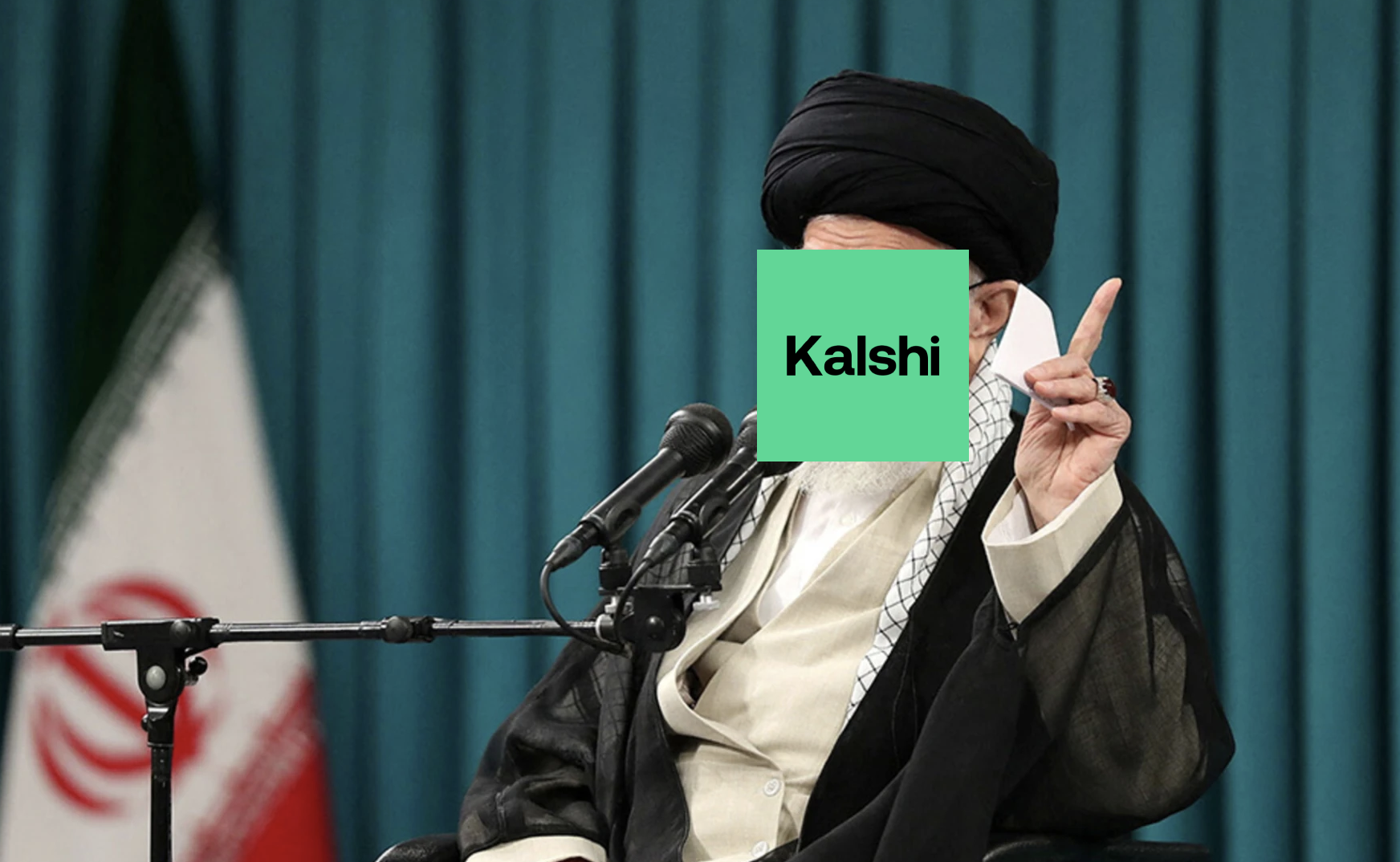
Kalshi handled the same event differently, refunding or adjusting its death-adjacent contracts rather than letting them settle on an assassination outcome. That tracks with CFTC rules: 17 CFR § 40.11 explicitly bars registered entities from listing contracts involving terrorism, assassination, or war. Polymarket, operating offshore, doesn't face those constraints. But a $553,000 payout timed to a killing is a tough thing to frame as routine price discovery.
Until now, the insider-trading risk in prediction markets has been mostly theoretical - a talking point regulators raise and platforms wave away with surveillance assurances. "Magamyman" puts a handle and a dollar figure on it. The related Polymarket market on U.S. strikes against Iran attracted roughly $529 million in total volume, which suggests there are other accounts with similar timing that just haven't been named yet.
I think this forces the industry into an uncomfortable choice. You can argue prediction markets are financial products that deserve CFTC oversight and mainstream legitimacy, or you can run offshore platforms where pseudonymous accounts collect six-figure payouts timed to military strikes. The industry has been trying to do both. That was always going to have an expiration date.

POLYMARKET NUKES ITS OWN MARKET ☢️
Polymarket has quietly archived its nuclear detonation markets - pulling contracts that let users bet on whether a nuclear weapon would go off anywhere on Earth - after renewed backlash amid the Iran conflict. The contracts weren't new; versions had been live for years, with the 2023 market drawing roughly $700K in volume and a later expiry accumulating over $1.7M. But a platform that once wore its "list anything" ethos as a point of pride is now making editorial choices about which markets are too toxic to keep live.
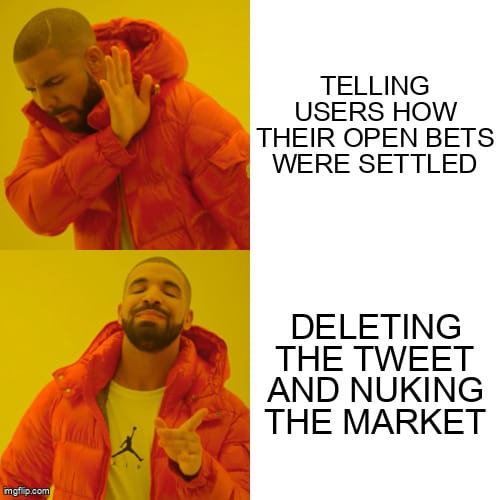
Before pulling the market, Polymarket had amplified it - posting on X that the contract implied a 22% chance of nuclear detonation this year, turning a niche bet into a shareable, headline-ready data point. That's not passive market infrastructure; that's odds marketing. When backlash hit, the post disappeared and the market followed. It's one thing to host a catastrophe contract quietly. It's another to broadcast the implied probability of nuclear war to your followers and then scrub the evidence.
Polymarket isn't CFTC-regulated, but it's not operating in a vacuum. Existing rules under 17 CFR 40.11 already bar registered exchanges from listing contracts tied to war, terrorism, or assassination, and the agency's 2024 proposal would tighten those prohibitions further. CFTC Chair Mike Selig has said clearer prediction-market guidance is coming "in the very near future." Hosting nuclear-detonation bets while U.S. regulators draw bright lines around that exact category - even if those lines don't technically apply to you - is a reputational risk Polymarket apparently decided wasn't worth carrying.
What hasn't been explained is how existing positions were handled - whether users got refunds, contracts settled at current prices, or open interest simply evaporated. For a platform processing billions in volume, the silence around de-listing procedures is its own problem. If you're going to exercise editorial discretion over which markets live and die, users need to know the rules before they put money down.
Polymarket built its reputation as the place where you could bet on anything from presidential elections to nuclear war. Pulling these contracts before any regulator forced the issue tells you the platform already knows where the line is heading - and that the anything-goes model that made it famous is becoming a liability faster than even its critics expected.

MULVANEY BETS AGAINST PREDICTION MARKETS 🎲
Mick Mulvaney - former acting White House chief of staff, former head of the CFPB - is launching an advocacy coalition called "Gambling Is Not Investing," targeting prediction markets that offer sports-related event contracts. His pitch is blunt: "If it looks like a sports bet, it's a sports bet." The coalition, which includes conservative groups like Moms for America, Frontiers of Freedom, and the Hispanic Leadership Fund, wants these contracts regulated under state and tribal gaming laws rather than treated as CFTC-overseen derivatives.
States have been making this exact argument in court for months. But Mulvaney brings something they don't have: a recognizable Republican operative with federal regulatory experience, explicitly building a political and PR campaign - not just a legal strategy - to pressure lawmakers and voters into seeing prediction markets' sports offerings as rebranded gambling. He's argued that the CFTC is structured to regulate markets, not to provide the consumer protections that come with state gaming oversight, and that platforms calling sports bets "trading" or "investing" are misleading consumers.
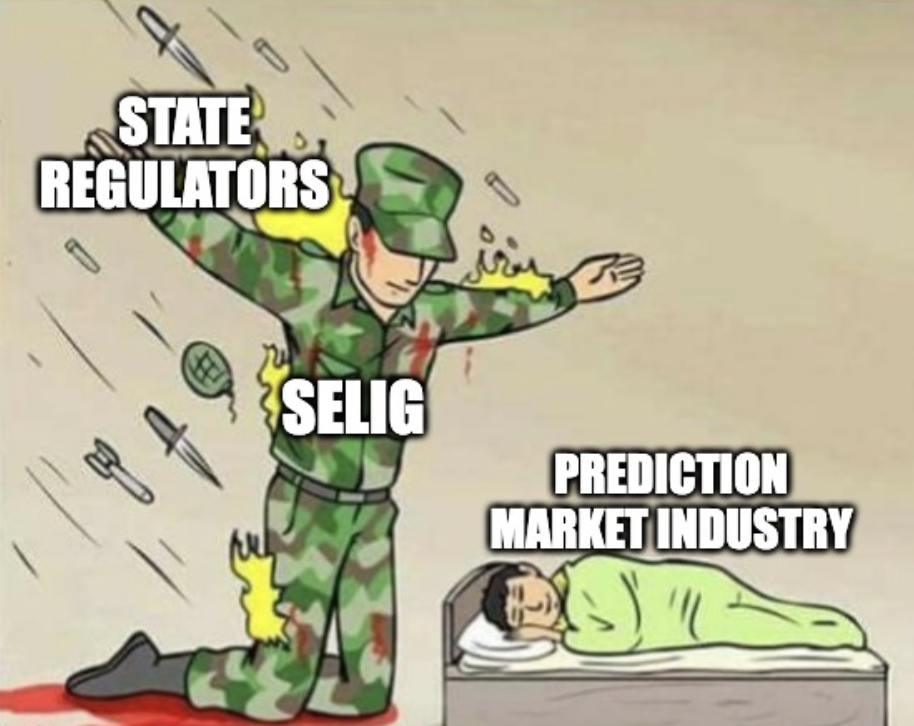
The CFTC under chair Michael Selig has been pushing in the opposite direction, aggressively defending federal jurisdiction and even filing a brief supporting Crypto.com against Nevada gaming regulators. Donald Trump Jr. is advising both Kalshi and Polymarket and has invested in Polymarket. Truth Social is planning its own prediction market product. Mulvaney, a Trump loyalist, is now running an organized campaign against the industry that parts of Trump's inner circle are actively building. It's an unusually public intra-Republican split on an issue where the party had mostly been aligned behind deregulation.

On the other side of the lobbying war, the Coalition for Prediction Markets - backed by Kalshi, Robinhood, Coinbase, and Crypto.com - hired former Congressman Sean Patrick Maloney as CEO and former House Financial Services Chair Patrick McHenry as senior adviser. Both coalitions are now deploying bipartisan political talent to make opposing cases, and the prediction markets industry has entered a full-blown Washington influence fight.
Mulvaney's coalition won't disclose its funders, which raises the obvious question: how much of this is bankrolled by incumbent sportsbooks and gaming interests that stand to lose if prediction markets eat into their market share? Whatever the answer, the effect is the same. Mulvaney gives state regulators a high-profile political ally at exactly the moment courts are split on federal preemption. The legal arguments for and against prediction markets haven't changed - but the political fight around them just professionalized in a hurry.

MARKET MOVES 📈
📈 Biggest swing: "Thunder vs. Knicks" moved 99% -> 61% (Polymarket)
💰 Top earner: @0x2a2c...9bc1 -- $422,192 24H Profit (Polymarket)
🤔 Weirdest market: "Will Elon Musk post 20-39 tweets from March 3 to March 10, 2026?" at 0% odds (Polymarket)

ODDS & ENDS 📊
Betr partners with Polymarket to bring event contracts across sports, politics, and culture to its mobile app starting this year.
Kalshi opens watch futures markets via a deal with Bezel, letting traders speculate on price moves for Rolex, Patek Philippe, and other luxury brands.
The Indian Gaming Association blasts the CFTC over prediction markets, arguing event-contract sports wagering threatens tribal sovereignty and calling for congressional action.