📊 Kalshi's $1 billion round
Plus: MLB bets on Polymarket, and prediction markets' media control
GM. You’re reading PredictionDesk, the daily newsletter that helps you become a prediction markets expert in under 5 minutes.
Here’s what we got for you today:
🚀 Kalshi just doubled its valuation in four months
🚫 Kalshi and Polymarket's individual reporter deals raise ethics questions their corporate media partnerships don't
🎲 Polymarket becomes MLB's exclusive prediction market partner with micro-market restrictions built in
📈 Market Moves
📊 Odds & Ends

$22 BILLION KALSHI IS NOW WORTH MORE THAN EVERY PUBLIC SPORTSBOOK 🚀
Kalshi just closed a $1 billion round led by Coatue Management, valuing the prediction market operator at $22 billion. That's double the $11 billion valuation it reached in December 2025, which itself was a 5x jump from $2 billion just nine months earlier. No company in the prediction market space has ever scaled this fast, and the fundraising trajectory makes most fintech unicorns look sluggish by comparison.
The valuation puts Kalshi above every publicly traded sports betting company. At $22 billion, it's worth $3.34 billion more than Flutter Entertainment (FanDuel's parent) and nearly $10 billion more than DraftKings. That gap is remarkable given Kalshi generates a fraction of the revenue those operators produce, but investors are clearly pricing in the optionality of event contracts as a new asset class, not just Kalshi's current volume.

Coatue's entry is worth noting. The firm has no prior prediction market investments and its closest adjacent bet was Webull, which itself offers event contracts through a Kalshi partnership. Getting a top-tier crossover fund off the sidelines signals that institutional capital increasingly views prediction markets as a standalone category rather than a gambling sideshow.
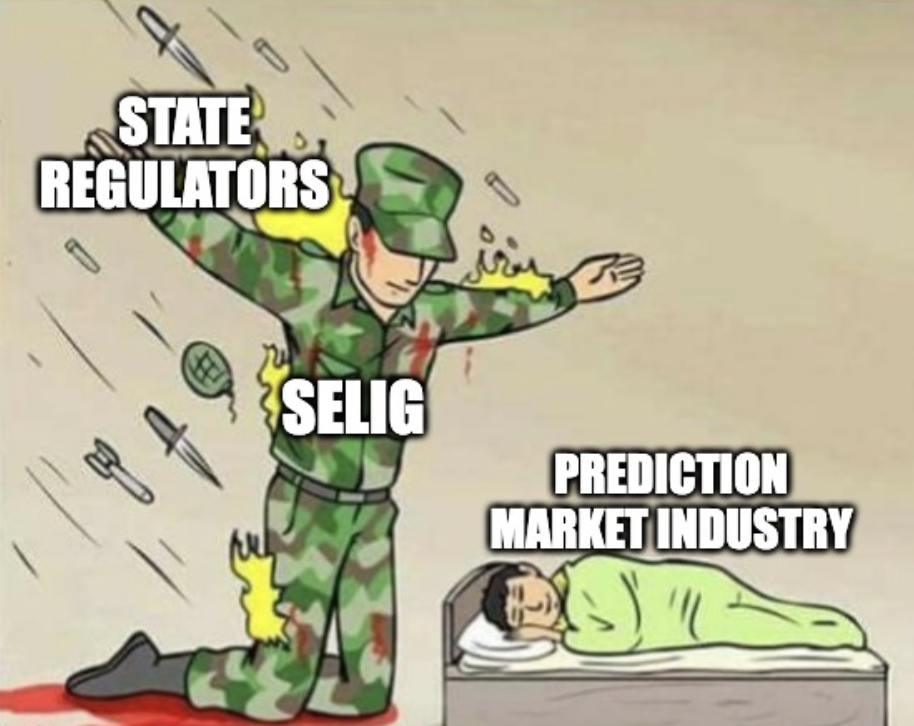
The funding arrived one day after Arizona's attorney general filed a 20-count criminal complaint against Kalshi for allegedly offering illegal political and sports event contracts in the state. CEO Tarek Mansour fired back on X, framing the action as incumbent protection: "A regulated exchange is being targeted to protect incumbents and prevent consumers from choosing." It's become a familiar playbook from state AGs, and so far investors have treated each new legal challenge as background noise rather than existential risk.
That investor confidence is the real story. Kalshi has raised roughly $2.5 billion in under a year while fighting active legal battles across multiple states, and each round has come at a higher multiple than the last. The market is telling prediction market skeptics something specific: the regulatory fights are a cost of doing business, not a reason to stay away. For smaller players without access to this kind of capital, the message is less encouraging. A $22 billion private valuation and a war chest to match means Kalshi can outspend rivals on legal defense, lobbying, and product development simultaneously. The prediction market arms race now has a clear frontrunner, and the gap is getting wider with every funding round.

KALSHI PITCHED A REPORTER. HE SAID NO. 🚫
Kalshi and Polymarket are pitching paid arrangements directly to individual reporters to write stories built around prediction market data. The Verge reports that entertainment journalist Rick Ellis, who runs an independent Substack newsletter about TV and streaming, received a formal offer: produce two stories per week using market odds, with pay in the mid-to-upper hundreds per post and additional compensation tied to click-through performance. Ellis turned it down.

"Getting pitched is normal but getting paid to do it just crosses a line," Ellis said. He compared the arrangement to taking money from a TV network for favorable coverage. Kalshi declined to comment; Polymarket didn't respond.
Those pitches look different from the institutional media partnerships both companies have been racking up. Kalshi has multi-year data deals with CNBC and CNN, complete with on-air tickers and real-time API access. AP is supplying Kalshi with election data. But those arrangements are negotiated at the corporate level, where newsroom standards and disclosure policies apply.
Individual writers don't usually have compliance departments or editors vetting sponsorship disclosures, which is probably the appeal. A respected byline writing about which Survivor contestant the market favors reads like editorial coverage, not a paid placement. Attach performance bonuses tied to engagement metrics and you've built something that looks a lot more like influencer marketing than data journalism - exactly the kind of undisclosed financial relationship the SPJ Code of Ethics was written to prevent.
I think this is where the industry's legitimacy push starts working against itself. Prediction markets have spent years arguing they're information tools, not gambling products. Paying reporters per-post to generate stories that drive traffic to your platform undercuts that framing. The CNBC and CNN deals at least carry institutional accountability. Pitching freelancers with engagement bonuses is the kind of thing that gives state regulators and newsroom ethics boards ammunition - and this industry really can't afford to be handing out more of that right now.

MLB BETS ON PREDICTION MARKETS, HEDGES THE BET 🎲
A year ago, MLB was telling the CFTC that sports event contracts "resemble sports betting" and that exchanges weren't even required to share integrity data with leagues. Now the league has signed a memorandum of understanding with the CFTC committing both sides to confidential information-sharing, regular meetings between designated representatives, and joint identification of integrity threats posed by specific markets. Twelve months from critic to co-regulator.

The MOU gives MLB something it specifically complained it lacked. In its March 2025 letter to the CFTC, the league said it had been advised that some exchanges and brokers believed they weren't permitted to share information with MLB under CFTC regulations. The new agreement flips that: the CFTC will now consider MLB's assessment of which exchange-listed contracts carry higher integrity risks, and MLB gets a direct line to report irregularities. It's not enforcement authority, but it's a seat at the table.
Those integrity concerns are already written into the commercial side. The Polymarket partnership restricts markets on individual pitch results, manager decisions, and umpire performance, the kinds of micro-markets where a single person could move the outcome. Polymarket will integrate these controls into its US Rulebook so brokers are held to the same standards.
The American Gaming Association's response was blunt. CEO Bill Miller argued the MOU doesn't legitimize what he called an "unlawful business model," insisting state and tribal frameworks already govern sports betting regardless of what the contracts are named. With Arizona's AG filing criminal charges against Kalshi and roughly 20 state-federal lawsuits still pending, the AGA's position has real weight, even if it's self-serving given that member sportsbooks like FanDuel and BetMGM stand to lose volume if prediction markets eat into their product.
But the deal has a tell: it includes language voiding the partnership if courts rule prediction markets violate state law. MLB is betting on a federal regulatory lane through the CFTC while hedging against the chance that states win the jurisdiction fight. If the federal framework holds, MLB just set the template for how leagues engage with prediction markets: partner commercially, co-regulate through Washington, and draw bright lines around the contracts that could tempt someone in a clubhouse. If states carve out sports contracts as gambling, the whole arrangement collapses. The league picked a side, but it left itself a way out.

MARKET MOVES 📈
📈 Biggest swing: "Will Houston Astros win the 2026 American League Championship Series?" moved 0% -> 5% (Polymarket)
💰 Top earner: @imnotawizard -- $689,545 24H Profit (Polymarket)
🤔 Weirdest market: "Will Jesus Christ return before 2027?" at 4% odds (Polymarket)

ODDS & ENDS 📊
A Ninth Circuit panel denied Kalshi's bid for an administrative stay, clearing the path for Nevada regulators to seek a temporary restraining order that could push the exchange out of the state for at least two weeks.
Polymarket is hunting for a chief risk officer as it builds out its legal and compliance bench for U.S. regulated operations - a hire that signals the CFTC's oversight expectations are already reshaping the org chart.

RATE TODAY’S EDITION

Unlock The $4 Trillion Rent Roll: Compound Your Wealth Like the 1%

Institutional giants use the $4 trillion rental market to compound millions. Now you can too. mogul offers fractional ownership in elite rental properties with 18.8% average IRR and zero property management required. Secure your share of the wealth Wall Street once kept for itself.
Past performance isn't predictive; illustrative only. Investing risks principal; no securities offer. See important Disclaimers