📊 Novig's $75M plan to unlock all 50 states
Plus: The paper that changes Kalshi's status, Polymarket links with blog site leader, and more exciting raises in the prediction markets space.
GM. You’re reading PredictionDesk, the daily newsletter that helps you become a prediction markets expert in under 5 minutes.
Here’s what we got for you today:
💰 Novig raises $75M at a $500M valuation to take on Kalshi with a trader-first sports exchange
💵 The Federal Reserve just wrote a 40-Page love letter to Kalshi
💰 Polymarket secures Substack partnership
📈 Market Moves
📊 Odds & Ends

NOVIG RAISES A $500M SERIES B 💰
Novig has raised $75 million in a Series B led by Pantera Capital, valuing the peer-to-peer sports prediction market at roughly $500 million. Multicoin Capital, Makers Fund, and Edge Equity joined the round alongside existing backers Forerunner, Perceptive Ventures, and NFX, bringing total funding past $105 million.
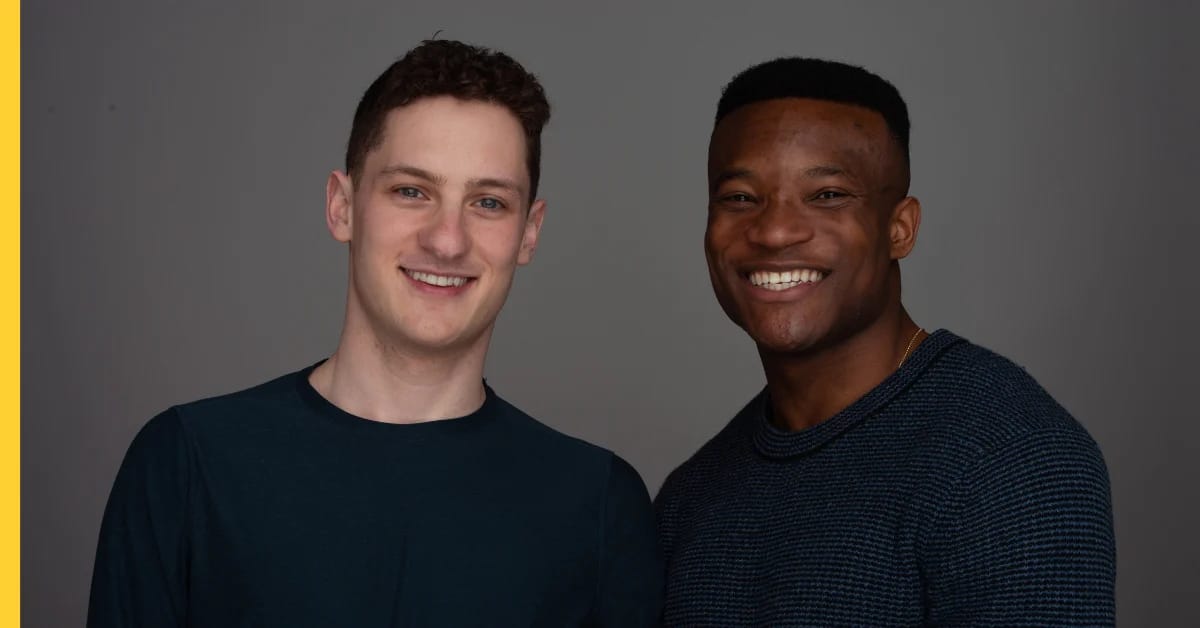
Novig CEO Jacob Fortinsky and CTO Kelechi Ukah
On January 21, Novig filed an application with the CFTC to become a Designated Contract Market through a new entity called Ludlow Exchange, LLC. If approved, the company plans to phase out its current sweepstakes model and transition to a fully CFTC-regulated prediction market within six months - regulated access across all 50 states without state-by-state licensing fights. That's where the $75 million is going.
The company launched in Colorado as a licensed betting exchange, expanded to New Jersey, then pivoted to a sweepstakes framework to reach a broader audience without individual state approvals. Now it's chasing DCM status, following the same federal-preemption playbook Kalshi has used - and that state regulators in Massachusetts and Nevada have started pushing back against.
Trading volume grew 10x during 2025, with annualized volume now exceeding $4 billion across more than 100,000 traders. Pantera claims 23% of Novig's users are profitable, compared to roughly 2% on traditional sportsbooks - a stat that makes the "this is a financial exchange, not a sportsbook" argument a lot easier to sell to regulators. Commission-free, order-book, peer-to-peer: Novig's model is built to pass the sniff test that Kalshi's parlay-style sports contracts are currently failing.
The regulatory risk is real - Kalshi is already eating preliminary injunctions on sports contracts, and Novig would face the same state-level challenges the moment it goes live with real-money markets. But I think Novig has one of the cleaner pitches in the space right now. A platform where nearly a quarter of users are profitable looks a lot more like a futures exchange than a gambling product, and that distinction matters when the whole industry's fate hinges on whether the CFTC or state gaming commissions get jurisdiction. Their business models reads like a team that keeps following the regulatory opening - and $500 million says the market agrees.

THE FED'S NEW FAVORITE FORECASTING TOOL 💵
The Federal Reserve just published a 40-page research paper on Kalshi. Three economists, two from the Fed Board and one from Johns Hopkins, authored a working paper arguing that Kalshi's prediction markets belong in the same conversation as Bloomberg consensus forecasts and fed funds futures. The paper, "Kalshi and the Rise of Macro Markets," landed February 12 in the Fed's Finance and Economics Discussion Series.
The headline finding: Kalshi has correctly predicted the Fed's interest rate decision the day before every single meeting since 2022. Fed funds futures, the tool Wall Street has relied on for decades, can't say the same. For inflation forecasts, Kalshi outperforms the Bloomberg survey of professional economists on headline CPI, and matches them on core CPI and unemployment, all while updating in real time instead of once every six weeks.

The paper's bigger argument goes beyond accuracy. Traditional forecasting tools tell you what the market expects to happen. Kalshi shows you the full range of what the market thinks could happen, and how likely each outcome is. The researchers found that when the Fed releases a statement, it shifts where traders think rates are going. When the Fed chair speaks at the press conference, it changes how uncertain traders are about the path forward. That level of detail didn't exist in any tradeable product before. For variables like GDP, core inflation, unemployment, and payrolls, Kalshi is the only market giving you that picture at all.
The paper also explicitly compares Kalshi against Polymarket, PredictIt, and Interactive Brokers, concluding Kalshi is "the most mature and comprehensive prediction market for economic forecasting." Polymarket gets a single sentence about operating in a "legal gray area." Kalshi's CFTC designation as a Designated Contract Market, the same classification as the CME, and its market-making relationship with Susquehanna get positioned as structural advantages. The paper also flags Kalshi's retail accessibility through Robinhood and Webull, framing that as a feature rather than a risk.
I think this is the most consequential thing that's happened to prediction markets' institutional credibility since the CFTC approved Kalshi's election contracts. When Fed researchers start building their own tools to extract probability distributions from your platform, and plan to publish daily distributional data at EconFutures.com, you've crossed from "novel fintech product" into "monetary policy infrastructure." That's a status no amount of lobbying or marketing can buy, and it sets a baseline that every competitor, regulated or otherwise, will now be measured against.

POLYMARKET LOCKS IN SUBSTACK 💰
Polymarket just locked in an exclusive partnership with Substack that lets writers embed live prediction market data directly into their posts. Starting today, any Substack author can pull real time odds from the world's largest prediction market and drop them into newsletters, essays, and analysis pieces as natively as they would a chart or a photo.

The integration means that when a writer is covering an election, a Fed decision, or a geopolitical crisis, they can show readers exactly where the money is sitting in that moment. The data updates live, so a reader opening a post in the morning could see different numbers than someone reading it over lunch. That changes the relationship between the writer and the reader, because the claim being made can be checked against a liquid market in real time, right there in the same paragraph.
Substack has spent years building the most important ecosystem for independent journalism and long form analysis on the internet. Millions of paying subscribers trust individual writers enough to hand over their credit card every month. That audience skews curious, skeptical, and deeply engaged with the subjects they follow. Prediction market data fits that readership almost perfectly, because it rewards the kind of people who want to think probabilistically about the world rather than consume headlines.
For Polymarket, this is a distribution play that money alone could never replicate. Every Substack post that embeds a Polymarket widget becomes a funnel back to the platform, reaching readers who are already primed to care about the underlying questions. The best advertising for a prediction market has always been showing someone a price that surprises them, and Substack's ecosystem is full of writers whose entire job is framing exactly those kinds of questions.
The deeper significance here is what this says about where prediction markets sit in the broader information economy. Bloomberg terminals serve Wall Street. Cable news serves a mass audience. Substack serves the growing class of people who pay for analysis they trust from individuals they respect. Polymarket embedding itself into that layer means prediction market data is becoming a standard input for serious commentary, sitting alongside polling data, government statistics, and earnings reports as something a thoughtful writer is expected to reference.
This partnership matters more for the normalization of prediction markets than almost any single regulatory win. When thousands of independent writers start weaving live odds into their coverage of politics, economics, science, and culture, the concept stops being something you have to explain to people. It just becomes part of how informed analysis looks and feels on the internet. That kind of organic integration into the workflow of journalism is something that builds slowly and then becomes very difficult to reverse, and Polymarket just made sure it starts building from the largest independent publishing platform in the world.

MARKET MOVES 📈
📈 Biggest swing: “Odds of Khamenei being out as Supreme Leader by March 31 over 25% in February?” moved 15% → 100% (Polymarket)
💰 Top earner: @Flupnolide - $264,493 24H Profit (Kalshi)
🤔 Weirdest market: “What will Daniel Radcliffe say on Hot Ones?” (Polymarket)

ODDS & ENDS 📊
Fireplace raised $1.5M to build the “smartest trading terminal” for prediction markets.
NASCAR eyes partnership with Kalshi, Polymarket, and Robinhood.
The Economist: Maybe insider Trading isn’t so bad after all.

RATE TODAY’S EDITION