📊 CFTC tells states to back off
Plus: 'Gruesome' war bets spark crackdown calls, and Kalshi's co-founder bet on herself at 1% odds
GM. You’re reading PredictionDesk, the daily newsletter that helps you become a prediction markets expert in under 5 minutes.
Here’s what we got for you today:
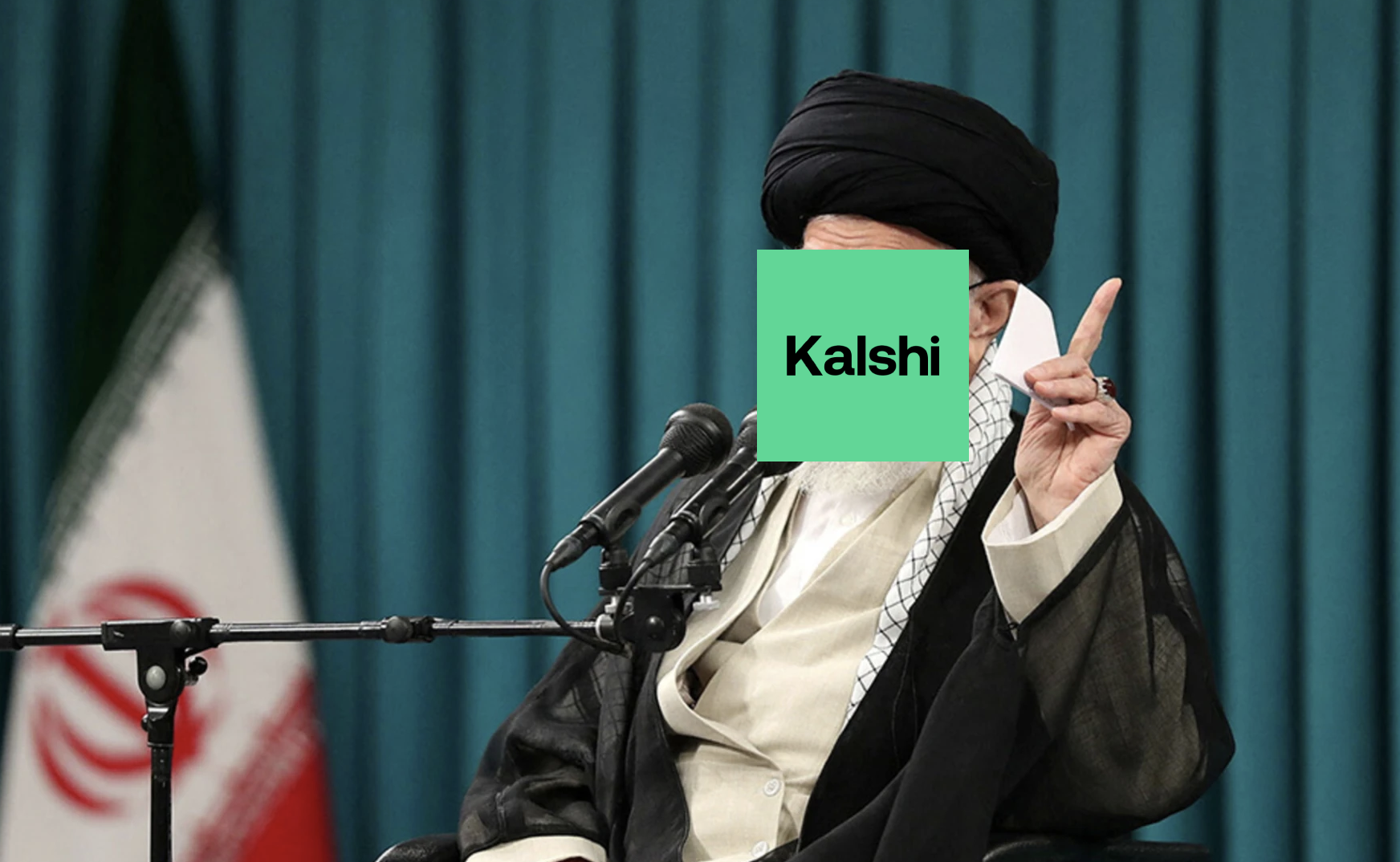
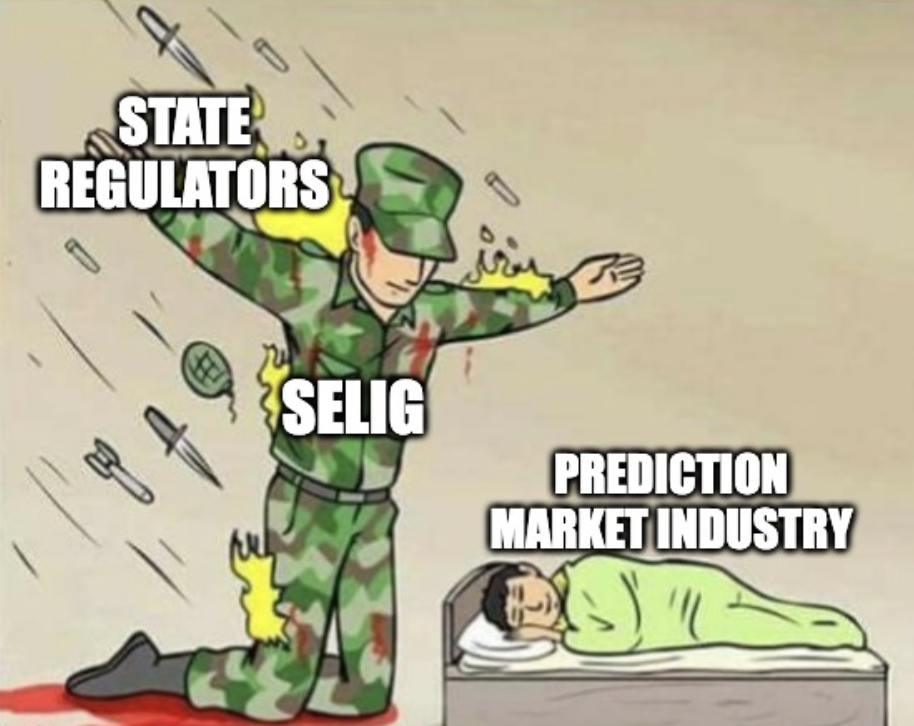
🫶 CFTC chair signals federal oversight over fifty state commissions, handing incumbents the framework they wanted
💃 CFTC Chairman Calls State Regulators 'Overzealous,' Files Briefs Backing Platforms
🎲 CNBC profiles Kalshi co-founder Luana Lopes Lara and the personal gambles behind an $11B rise
📈 Market Moves
📊 Odds & Ends

THE CFTC WANTS TO BE YOUR ONLY REGULATOR 🫶
Both Kalshi and Polymarket are in early-stage fundraising talks that could value each company at roughly $20 billion, according to The Wall Street Journal. Kalshi closed a $1 billion round in December at an $11 billion valuation; Polymarket was at roughly $9 billion after ICE agreed to invest up to $2 billion in October. If these discussions materialize anywhere near the reported figures, both platforms will have nearly doubled in under six months.

Those conversations are happening while the CFTC moves to assert control over the industry. On March 12, the agency published an Advanced Notice of Proposed Rulemaking asking whether event contracts tied to war, terrorism, assassination, and gaming should be prohibited as contrary to the public interest. The filing also flags the sheer pace of growth driving Washington's attention: certified event-contract listings jumped from about five per year between 2006 and 2020 to roughly 1,600 in 2025.
"The more we try to block these markets... it just goes offshore," CFTC Chair Michael Selig told Reuters, framing the rulemaking as guardrails rather than a shutdown. Selig is making a deliberate play - claim exclusive federal jurisdiction over prediction markets while signaling the agency won't try to kill the industry.
For Kalshi and Polymarket, that's close to the best possible outcome. One federal regulator setting the rules is vastly preferable to fifty state gaming commissions each drawing their own lines. A $20 billion valuation doesn't just price in prediction market growth; it prices in that federal framework becoming a competitive moat. If the CFTC builds a compliance-heavy regime, the platforms with existing registrations, institutional backing, and legal infrastructure come out ahead - while crypto-native startups and smaller operators get priced out.
Congress could upend that calculus. The DEATH BETS Act, introduced by Rep. Mike Levin and Sen. Adam Schiff, would ban contracts tied to war, terrorism, and death outright, carving out categories rather than regulating them. If the political appetite for restriction extends beyond the current backlash into broader event types, $20 billion assumes a total addressable market that legislators might actively shrink. The institutional money flowing in right now is making a different bet: that prediction markets survive regulation, and the compliance costs become the barrier to entry that protects the incumbents who can afford them.

CFTC TO CRITICS: FROLIC ELSEWHERE 💃
While critics target war-related event contracts, the federal agency they're asking to intervene is heading the other direction. CFTC Chairman Michael Selig called state regulators "overzealous" in a February op-ed and disclosed that platforms now face nearly 50 active state-level legal challenges to the CFTC's exclusive jurisdiction over event contracts. The agency has been filing amicus briefs backing the platforms.
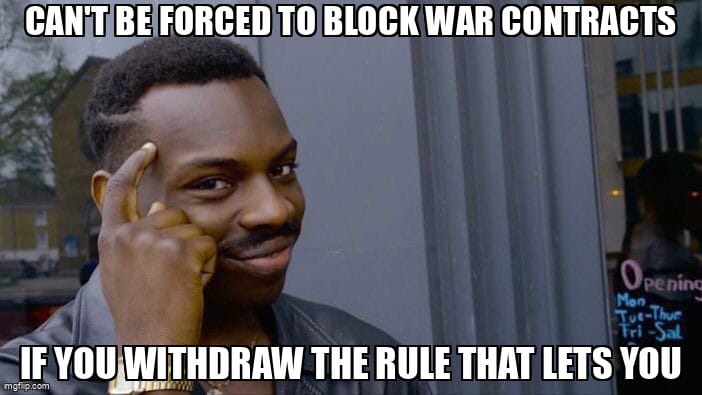
The CFTC went further in early February, formally withdrawing its 2024 proposed event contracts rule. That proposal would have expanded the agency's power to block contract listings deemed contrary to the public interest. Selig called it a "frolic into merit regulation." The regulator critics want to crack down on war-adjacent betting just gave up the tool that would have let it.
Public Citizen's March 5 letter to Selig pushed back, arguing that existing prohibitions on contracts involving war, terrorism, or assassination are "easily and frequently sidestepped through careful wording." The group asked the CFTC to investigate suspicious trading on Iran-related contracts as potential insider trading tied to nonpublic government information, and to disclose the identities of large bettors.
ICE, the NYSE's parent company, committed up to $2 billion to Polymarket last October at roughly an $8 billion valuation, with plans to distribute event-driven data to institutional investors worldwide. The operator of the world's most recognized stock exchange now has a financial stake in a platform that hosted hundreds of millions in Iran-related wagers. Institutional credibility is growing faster than the industry's ability to explain why some of its most popular products aren't dressed-up war gambling.
After two KalshiEX insider-trading cases, the CFTC did issue an enforcement advisory in late February showing it can police fraud on its exchanges. But policing bad actors after the fact is different from deciding which contracts should exist. The industry has never had more institutional backing, but that only holds as long as these contracts stay a political sideshow. If they don't, the CFTC's permissive posture becomes a liability, not a shield.

KALSHI'S FOUNDER BET ON HERSELF AT 1% ODDS 🎲
CNBC profiled Kalshi co-founder Luana Lopes Lara on Friday, framing the company's $11 billion rise as a series of personal gambles she made when nearly everyone around her said they wouldn't pay off. Founded in 2018 with MIT classmate Tarek Mansour, Kalshi spent years grinding through CFTC approvals before the founders made their biggest call: suing the federal government to force election markets into existence.
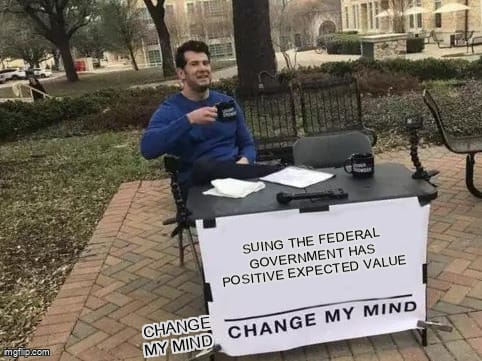
For almost two years, Lopes Lara told Kalshi's board the election push was progressing. Their response, per CNBC: "It's not working." Outside advisors were blunter, telling the founders approval was "impossible" and "the odds are lower than 1%." She pushed ahead anyway. Her framework, as she describes it, is about mapping scenario trees and assigning probabilities rather than going with gut. She argues most people systematically overestimate downside risk, and that the expected value of suing was positive even when the probability of winning looked low.
The CFTC formally blocked Kalshi's congressional control contracts in September 2023. A year later, a D.C. district court vacated the prohibition, writing that "Kalshi's contracts do not involve unlawful activity or gaming. They involve elections, which are neither." The D.C. Circuit denied the CFTC's emergency stay weeks before the 2024 election, and Kalshi was off. Lopes Lara calls election markets "the holy grail," and the growth since tracks: the company now claims roughly $2 billion in weekly transactions, with ~$130 million in election-related volume during NYC's mayoral race and about $1 billion during the Super Bowl.
Worth noting: CNBC discloses a commercial relationship with Kalshi that includes customer acquisition and a minority investment. The profile is largely uncritical, arriving at a moment when the company is under more scrutiny than at any point in its history.
Kalshi needs the "scrappy founders who bet on themselves" narrative precisely because the company has grown past the point where that story alone can shield it. Suing the CFTC worked when Kalshi was a small exchange fighting for its right to exist. At $11 billion and billions in weekly volume, the next set of regulatory and political fights won't be resolved by a single sympathetic judge. The risk appetite that built Kalshi is the same appetite now drawing the fire.

MARKET MOVES 📈
📈 Biggest swing: "US forces enter Iran by December 31?" moved 66% -> 63% (Polymarket)
💰 Top earner: @CemeterySun -- $915,675 24H Profit (Polymarket)
🤔 Weirdest market: "Will Stephen Smith win the 2028 US Presidential Election?" at 1% odds (Polymarket)

ODDS & ENDS 📊
Polymarket's regulated U.S. platform has crossed $761M in cumulative notional volume and 5 million transactions, with 524 unique tickers trading in a single day as the QCEX-powered exchange scales rapidly.
Alchemy launched AgentCard, a payment rail that lets AI agents autonomously trade on Polymarket, pay for inference APIs, and place DoorDash orders - blurring the line between bot infrastructure and event-market liquidity.
Business Insider rounds up Oscars prediction-market odds across Kalshi and Polymarket ahead of tonight's ceremony, with tens of millions wagered and "One Battle After Another" leading Best Picture at 76%.

RATE TODAY’S EDITION

Go from AI overwhelmed to AI savvy professional

AI will eliminate 300 million jobs in the next 5 years.
Yours doesn't have to be one of them.
Here's how to future-proof your career:
Join the Superhuman AI newsletter - read by 1M+ professionals
Learn AI skills in 3 mins a day
Become the AI expert on your team